
Choosing a fiber laser cutting machine is not simply about buying the highest laser power available.
For most metal fabrication businesses, the right machine depends on four things: material, thickness, part size, and production volume.
For many general fabrication applications, a 3000W or 6000W fiber laser cutting machine can cover a large proportion of daily production needs. Higher power becomes more valuable when thick plate, high-volume production, or cutting speed is a regular requirement.
The key principle is simple:
Choose the laser power for the material you cut regularly — not the thickest material you might cut once or twice a year.
This 2026 buyer’s guide explains how fiber laser cutting machines work, how to choose laser power, cutting thickness and machine size, the differences between plate and tube machines, important specifications, costs, ROI, and what to check before buying from a manufacturer.
Key Takeaways
If you only remember five things from this guide, make them these:
- Match laser power to your regular material thickness, not occasional jobs.
- Consider economic cutting thickness, not only the advertised maximum thickness.
- Choose the machine structure according to whether you process sheet, plate, tube, or profiles.
- Compare the total cost of ownership, including gas, electricity, consumables, installation and service.
- Before purchasing, verify the manufacturer’s factory, test-cutting capability, certifications and after-sales support.
For buyers comparing several quotations, these factors are usually more important than the machine price alone.
What Is a Fiber Laser Cutting Machine?
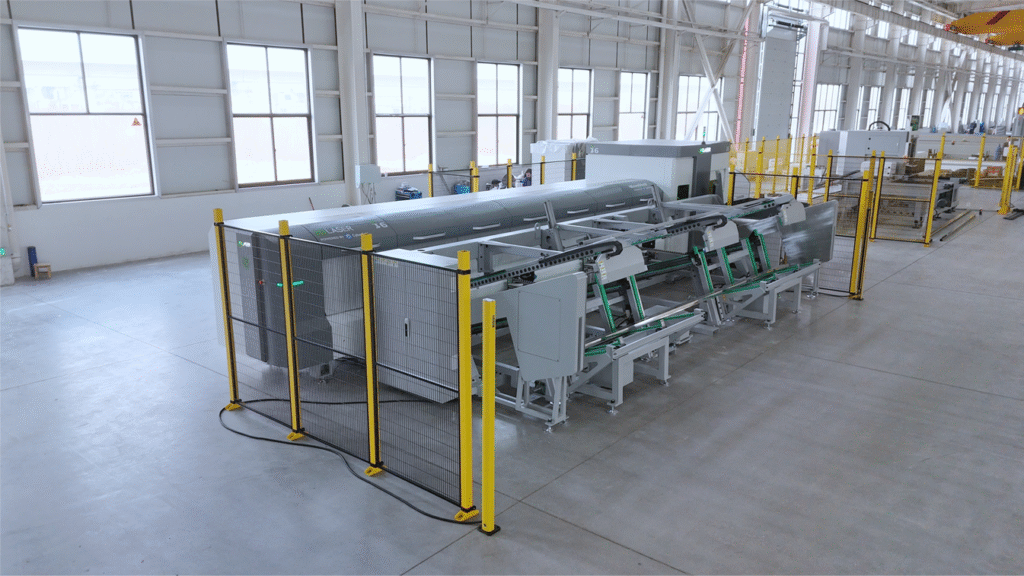
A fiber laser cutting machine is a CNC machine tool designed to cut metals using a highly focused fiber laser beam.
The laser source produces light at approximately 1.06 μm, a wavelength that metals absorb efficiently. The laser energy travels through an optical fiber to the cutting head, where it is focused onto a very small area of the workpiece.
The CNC system controls the movement of the cutting head while assist gas removes molten material from the kerf.
Common assist gases include:
- Oxygen for carbon steel
- Nitrogen for stainless steel and aluminum
- Compressed air for selected applications
A typical fiber laser cutting system consists of the laser source, cutting head, CNC controller, machine bed, gantry, servo system, chiller, assist-gas system and either an exchange table for sheet processing or rotary chucks for tube processing.
Modern systems can also include automatic focusing, edge detection, nesting software, automatic loading and unloading, and intelligent production management.
Why Are Fiber Lasers Used for Metal Cutting?
Fiber laser technology has become one of the primary technologies used for industrial metal cutting.
Compared with traditional CO₂ laser systems, fiber lasers typically provide faster processing of many metal materials while requiring less routine optical maintenance.
They are especially suitable for:
Carbon steel, stainless steel, aluminum, galvanized steel, copper and brass.
For manufacturers processing sheet metal, structural components, machinery parts, metal furniture, automotive components or tubes and profiles, fiber lasers combine high cutting speed with CNC automation and repeatable production.
Fiber Laser vs CO₂ Laser Cutting Machine
The two technologies serve different markets.
| Comparison | Fiber Laser | CO₂ Laser |
|---|---|---|
| Primary application | Metal cutting | Metal + many non-metal materials |
| Laser wavelength | ~1.06 μm | ~10.6 μm |
| Thin metal cutting | Very fast | Slower at comparable power |
| Stainless/aluminum | Excellent | Suitable |
| Copper/brass | Better suited | More difficult |
| Energy efficiency | Higher | Lower |
| Optical maintenance | Lower | Higher |
| Acrylic/wood/leather | Not suitable | Excellent |
| Industrial metal production | Preferred | Application-dependent |
If your business primarily processes metal, a fiber laser is generally the more appropriate technology.
If you primarily cut acrylic, wood, leather or similar non-metal materials, a CO₂ laser machine is normally the better choice.
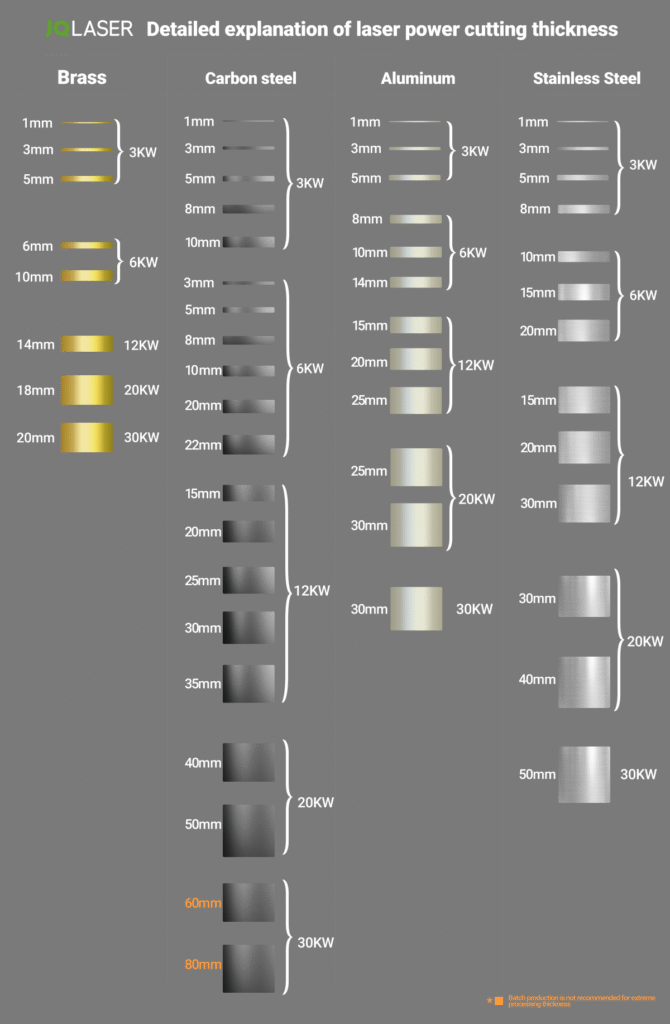
Fiber Laser Power and Cutting Thickness
Laser power is one of the most important specifications when selecting a machine.
However, buyers should distinguish between:
Maximum cutting thickness — the thickest material the machine can technically cut.
Economic cutting thickness — the thickness range where the machine maintains practical cutting speed, edge quality and operating cost.
The second figure is usually more important for production.
Typical Fiber Laser Cutting Thickness
| Laser Power | Carbon Steel Max* | Stainless Steel Max* | Economic Carbon Steel Range* |
|---|---|---|---|
| 1000W | 12–16 mm | 6–8 mm | ≤6 mm |
| 1500W | 16–20 mm | 8–10 mm | ≤8 mm |
| 2000W | 20–22 mm | ~10 mm | ≤10 mm |
| 3000W | 22–25 mm | ~12 mm | ≤12 mm |
| 6000W | 30–35 mm | 20–25 mm | ≤20 mm |
| 12000W | 45–60 mm | 30–40 mm | ≤30 mm |
Typical industry reference values. Actual cutting capability depends on the laser source, material grade, assist gas, cutting parameters, cutting head and required edge quality. Always confirm final performance through sample cutting.
This distinction prevents one of the most common purchasing mistakes: buying significantly more laser power than the production process actually requires.
What Laser Power Should You Choose?
A simple way to choose is to start with the thickest material you process regularly.
For example:
If most of your work is 1–6 mm sheet metal, very high laser power may provide limited economic benefit.
If your factory regularly processes 10–20 mm carbon steel, higher power can substantially improve throughput.
If thick plate is a major part of your production, 12kW and higher systems become more relevant.
The correct decision should therefore consider:
Material + thickness + required speed + daily production volume.
At JQ Laser, this is also how we recommend configurations to customers. Instead of starting with a machine model, our engineers first look at the customer’s actual parts and production requirements.
Not sure which laser power you need?
Send us your material, maximum thickness, sheet size and expected production volume. Our engineers can recommend an appropriate configuration before you request a final quotation.
Plate Laser Cutting Machine or Tube Laser Cutting Machine?
The next decision is machine structure.
Fiber Laser Plate Cutting Machine
Choose a plate machine when your main products are manufactured from flat sheet or plate.
Common applications include:
Electrical cabinets, machinery components, construction equipment, automotive parts, sheet-metal enclosures and structural components.
Typical working areas include:
1500 × 3000 mm
2000 × 4000 mm
1500 × 6000 mm
Larger formats are also available for heavy fabrication and structural-steel applications.
When comparing machines, make sure the usable working area accommodates your standard raw sheet without unnecessary repositioning.
Fiber Laser Tube Cutting Machine
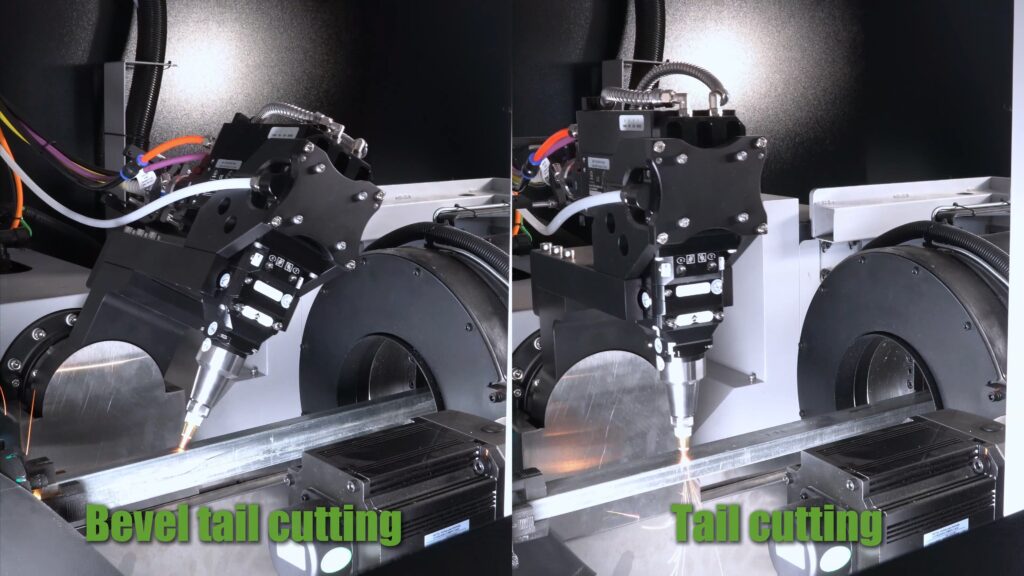
Choose a tube laser when your products mainly use:
Round tube, square tube, rectangular tube or other metal profiles.
Typical applications include metal furniture, fitness equipment, handrails, machinery frames, automotive parts and structural fabrication.
Important specifications include:
Maximum tube diameter, maximum tube length, tube weight, chuck configuration, profile compatibility, loading method and residual tail length.
Two-chuck and three-chuck systems can provide different advantages depending on the application and required material handling.
For high-volume production, automatic loading and unloading can become as important as laser power itself.
Plate-and-Tube Combination Machine
Combination machines integrate flat-sheet and tube processing into one system.
They can be useful for manufacturers that process both materials but do not have enough production volume to justify two dedicated machines.
However, if either sheet or tube production dominates your workload, a dedicated machine is often more efficient.
8 Key Specifications to Compare Before Buying
Two machines may look almost identical in photographs but perform very differently in actual production.
When comparing quotations, check at least these eight specifications.
| Specification | What to Check | Typical Industry Reference |
|---|---|---|
| Laser power | kW rating and source brand | 1–30+ kW |
| Working area | Plate size / tube diameter & length | Application-dependent |
| Cutting thickness | Material + assist gas | Refer to cutting table |
| Cutting speed | Specify material and thickness | 8–15 m/min on 2 mm carbon steel at 3000W* |
| Positioning accuracy | Machine positioning/repeatability | ±0.03–0.05 mm* |
| Laser source life | Rated operating hours | ~100,000 h* |
| Assist gas | O₂ / N₂ / compressed air | Application-dependent |
| Warranty & support | Warranty, spare parts, response | JQ: 5 years / 24 h |
Typical industry values; verify the actual specification of the machine being quoted.
Pay particular attention to positioning accuracy, machine-bed rigidity, cutting-head configuration, drive system and after-sales support.
A powerful laser source installed on a poorly designed mechanical platform does not automatically create a high-performance cutting machine.
Cutting Speed: Don’t Compare One Number
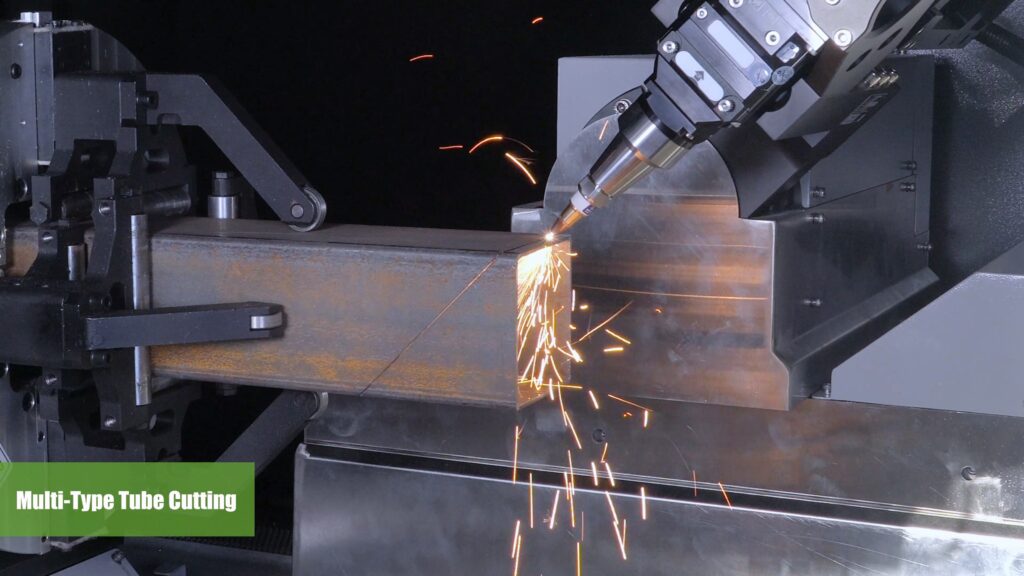
Cutting speed is frequently misunderstood.
A supplier might advertise a very high speed without specifying:
Material
Thickness
Laser power
Assist gas
Required edge quality
Without those conditions, the number has little value.
For example, a 3000W fiber laser may typically cut 2 mm carbon steel at approximately 8–15 m/min, while actual production speed changes substantially with thickness and process settings.
On thin sheet, the laser itself may not even be the production bottleneck.
Loading, unloading, nesting, piercing, part sorting and material handling can determine overall productivity.
This is why manufacturers with high production volumes should evaluate the entire cutting process, not only maximum cutting speed.
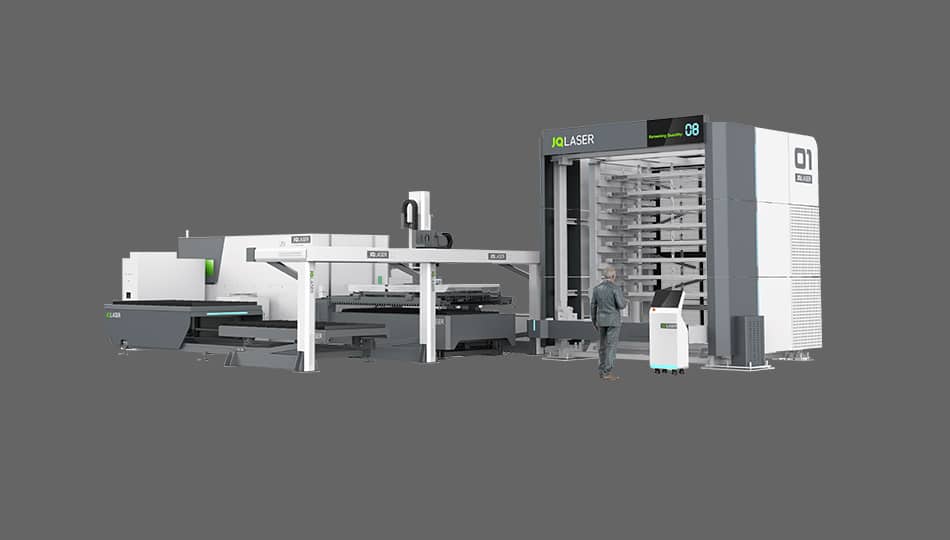
Automation Can Matter More Than Additional Laser Power
This is particularly important for factories considering high-power systems.
Increasing laser power can reduce cutting time, but if operators still manually load sheets, wait for material, unload finished parts and sort components, the machine may spend too much time idle.
Depending on production volume, productivity improvements can also come from:
- Exchange tables
- Automatic sheet loading
- Automatic unloading
- Tower storage systems
- Automatic tube loading
- Part sorting
- Production management software
For high-volume factories, the best investment is therefore not always the highest-power laser source.
Sometimes it is a better automated production system.
What Determines Fiber Laser Cutting Machine Price?
There is no meaningful universal price for a fiber laser cutting machine because the configuration can vary substantially.
Four factors have the largest impact.
1. Laser Power and Source Brand
The laser source represents a major part of machine cost.
A 6000W system normally costs considerably more than a 3000W system.
The source manufacturer can also influence the final quotation.
Common brands include IPG, nLIGHT, Raycus and MAX.
2. Working Area and Machine Structure
A larger and heavier machine requires more material, larger guide systems and different handling equipment.
A 4020 machine will therefore generally cost more than a standard 3015 configuration.
Exchange tables, protective enclosures and heavy-duty beds also affect cost.
3. Automation
Automatic loading, unloading, storage towers and intelligent material handling increase the initial investment but can significantly reduce manual work.
Their value should be evaluated according to production volume rather than purchase price alone.
4. After-Sales Support
Installation, operator training, spare parts, remote diagnostics and warranty terms can vary significantly between manufacturers.
These costs should be included when comparing quotations.
Compare Total Landed Cost
Instead of asking only:
“How much is the machine?”
compare:
Machine + freight + installation + training + gas system + consumables + maintenance + expected downtime.
A cheaper machine is not necessarily a lower-cost machine over five or ten years.
Need an accurate quotation?
Provide your material, thickness, working area and automation requirements. A configuration-based quotation is much more useful than comparing generic machine prices.
Buying a Fiber Laser Cutting Machine from China
China has become one of the world’s major manufacturing bases for industrial laser equipment.
For international buyers, purchasing directly from a manufacturer can provide significant cost and configuration advantages.
However, supplier verification is essential.
Before making a deposit, check the following.
Certification
If CE compliance is required for your market, request the actual documentation rather than relying on a CE logo displayed on a website.
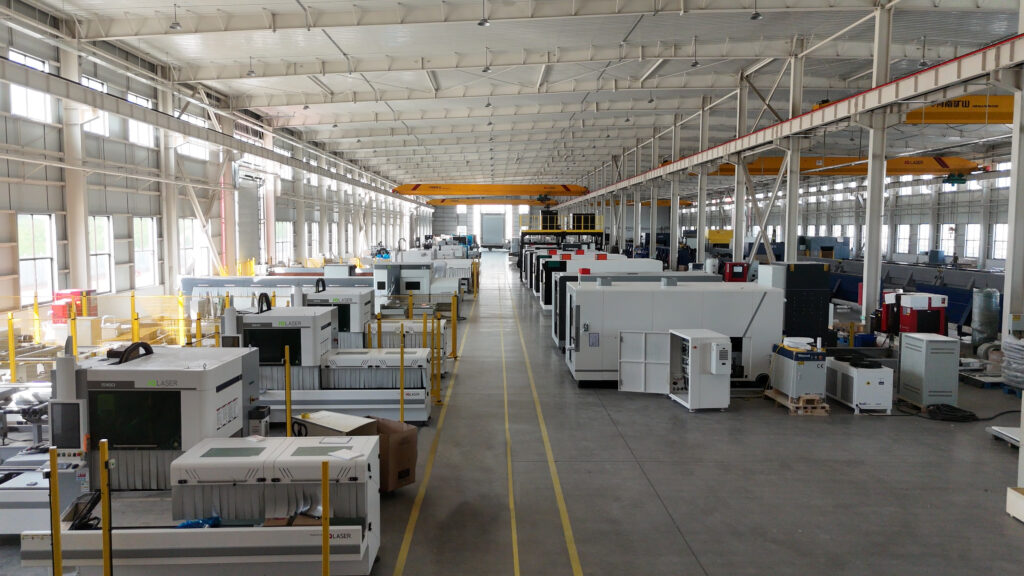
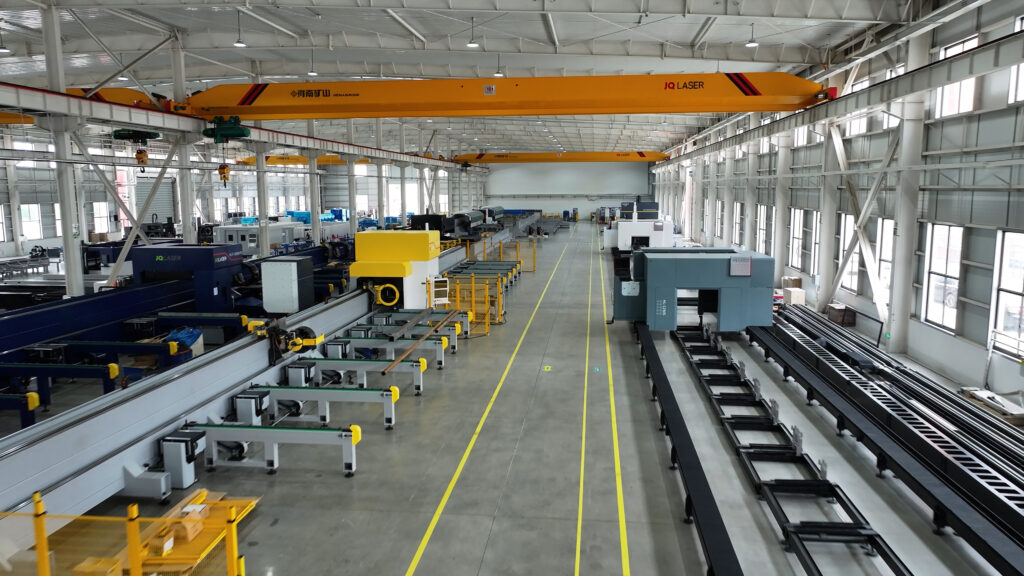
Factory Verification
Ask for:
Live factory video
Production-line photos/video
Machine assembly process
Quality-control process
Third-party inspection if required
A real manufacturer should be able to demonstrate how its machines are produced.
Sample Cutting
This is one of the most important steps.
Send your own:
DXF drawings
Material
Thickness
Quality requirements
and ask the manufacturer to perform a real cutting test.
The result tells you much more than a brochure.
After-Sales Support
Confirm in writing:
Warranty period
Installation arrangement
Remote support
Spare-parts availability
Response time
Service coverage
Payment Terms
Payment arrangements vary by supplier and project. A common structure is a deposit followed by the balance before shipment, often after machine testing or inspection.
The exact terms should be clearly stated in the contract.
How JQ Laser Approaches Machine Selection
JQ Laser has more than 20 years of experience in industrial laser equipment manufacturing and international markets.
Rather than recommending a machine only according to laser power, the selection process should begin with the customer’s production.
The engineering team considers:
What materials do you cut?
What are the regular and maximum thicknesses?
What is the largest workpiece?
How many hours will the machine operate each day?
Is production sheet-based, tube-based or mixed?
Does the factory need automatic loading?
Is bevel cutting required?
What level of automation is expected?
These questions help determine whether the customer needs a conventional plate machine, tube cutting system, high-power production machine or a more automated manufacturing solution.
JQ Laser machines are exported to 93 countries. Each machine undergoes 72 hours of factory testing before shipment, with service requests answered within 24 hours.
How to Evaluate a Laser Cutting Test
Do not judge a sample only by whether the laser successfully cuts through the material.
Check:
Edge quality
Look for excessive dross, roughness or burning.
Corner quality
Small contours and sharp corners often reveal motion-control performance.
Hole quality
Compare the quality of small holes with their diameter and material thickness.
Piercing
Thick-material piercing can significantly affect cycle time.
Repeatability
Ask the manufacturer to cut multiple identical parts rather than one ideal sample.
Actual cycle time
Measure complete processing time, not only straight-line cutting speed.
For important projects, send your own production drawings instead of allowing the supplier to select an easy demonstration part.
Fiber Laser Cutting Machine ROI
A laser machine should ultimately be evaluated as a production investment.
A basic ROI calculation is:
Machine Investment ÷ Monthly Net Savings = Approximate Payback Period
Monthly savings can include:
Reduced subcontracting
Lower labor requirements
Higher production capacity
Shorter lead times
Lower scrap
Reduced secondary processing
Running costs should include:
Electricity
Assist gas
Consumables
Labor
Maintenance
Depreciation
Many manufacturers use an 18–36 month payback period as a planning reference for single-shift operation, although actual ROI varies substantially by workload and local operating costs.
The calculation often improves significantly when the machine runs multiple shifts or replaces expensive outsourced cutting.
Common Buying Mistakes to Avoid
Several mistakes repeatedly lead to unnecessary investment or disappointing production results.
Buying too much power
Higher power is useful only when your material and production volume can benefit from it.
Looking only at maximum thickness
Maximum cutting capability does not equal economical production capability.
Comparing only purchase price
Operating cost, downtime, service and automation can have a much greater long-term impact.
Ignoring material handling
A fast laser waiting for operators to load material is not a fast production system.
Buying without sample testing
Always test your actual material and drawings before final acceptance.
Ignoring after-sales capability
Technical support becomes especially important when equipment is installed thousands of kilometers from the factory.
Domande frequenti
What materials can a fiber laser cutting machine cut?
Fiber laser cutting machines are primarily used for metals including carbon steel, stainless steel, aluminum, galvanized steel, copper and brass. Appropriate cutting parameters and assist gas depend on the material.
For acrylic, wood, leather and many other non-metal materials, a CO₂ laser is generally more suitable.
What thickness can a 3000W fiber laser cut?
Typical reference values are approximately 22–25 mm carbon steel and around 12 mm stainless steel, although maximum thickness depends on material, assist gas, laser source, cutting head and required quality.
For production planning, the economic cutting range is more important than maximum thickness.
Is 3000W or 6000W better?
Neither is universally better.
If your regular production is relatively thin sheet, 3000W may provide a better investment balance.
If thicker material or higher throughput is common, 6000W can offer greater productivity.
The correct choice depends on your actual production mix.
How fast is a fiber laser cutting machine?
Cutting speed depends on laser power, material, thickness, assist gas and edge-quality requirements.
As a typical reference, a 3000W system may cut 2 mm carbon steel at approximately 8–15 m/min.
Always compare speeds under identical cutting conditions.
How much does a fiber laser cutting machine cost?
Price varies according to laser power, working area, source brand, machine structure, automation and service package.
For this reason, an accurate quotation should be based on your production requirements rather than a generic price range.
How long does a fiber laser source last?
Fiber laser sources are commonly rated at approximately 100,000 operating hours, although actual service life depends on the source, operating environment and maintenance.
Can one machine cut both sheet and tube?
Yes.
Plate-and-tube combination machines integrate a flat cutting table with a rotary tube-cutting system.
They are useful for mixed production, while dedicated plate or tube machines are generally better suited to higher-volume specialized production.
Should I buy a fiber laser directly from China?
Buying directly from a Chinese manufacturer can be a practical option for international metal fabricators, but supplier verification is important.
Check the factory, certification, sample-cutting results, machine configuration, warranty and service arrangements before payment.
How to Choose the Right Fiber Laser Cutting Machine
Before requesting a quotation, prepare these six pieces of information:
- Material: carbon steel, stainless steel, aluminum, etc.
- Regular thickness: what you cut most often.
- Maximum thickness: your thickest occasional requirement.
- Workpiece size: sheet dimensions or tube diameter × length.
- Production volume: parts, sheets or operating hours per day.
- Automation requirement: manual, semi-automatic or fully automated production.
With these details, an experienced manufacturer can recommend a much more accurate machine configuration.
The goal is not to purchase the most powerful fiber laser cutting machine.
The goal is to purchase the machine that produces your parts at the lowest practical cost, with the required quality and enough capacity for future growth.
Get a Fiber Laser Cutting Machine Recommendation
Not sure whether you need 3000W, 6000W, 12000W or a higher-power system?
Send JQ Laser your:
Material + Thickness + Workpiece Size + Drawings + Production Requirements
Our engineering team can evaluate your application and recommend a suitable plate, tube or automated fiber laser cutting solution.
