
A steel structure manufacturer in Türkiye has installed two 20 kW laser cutting machines to support thick-plate, H-beam and large-tube processing.
The installation combines a plate laser cutting machine with a tube laser cutting machine. Both are configured for bevel cutting. Installation and operator training have been completed, and the equipment is now in production.
The customer’s identity is withheld for confidentiality.

Cutting Requirements in Steel Structure Manufacturing
Steel structure fabrication involves components with different shapes, dimensions and preparation requirements.
For this customer, the reported applications include:
- Carbon steel plate, primarily 30–40 mm thick.
- H-beams with thickness requirements extending beyond 20 mm.
- Large metal tubes.
- Bevel cutting for relevant component and connection details.
These figures describe the customer’s processing requirements. Cutting suitability and performance depend on material grade, component geometry, equipment configuration and process conditions.
The two-machine arrangement provides separate equipment for flat plate and for H-beams and tubes, allowing each application to be reviewed against its own cutting and handling requirements.
Delivered Equipment Configuration
The machine nameplates record the following project-specific specifications:
| Item | Plate Laser Cutting Machine | Tube Laser Cutting Machine |
|---|---|---|
| Nameplate model | JQ-31120HE | 12065HTS |
| Laser power | 20 kW | 20 kW |
| Nameplate working range | 3,100 × 12,000 mm | 650 × 12,000 mm |
| Electrical supply | 380 V / 50 Hz | 380 V / 50 Hz |
| Bevel cutting | Included in the delivered configuration | Included in the delivered configuration |
These specifications describe the delivered machines rather than every configuration available within a product family.
For the tube laser cutting machine, the stated working range does not define the permissible dimensions of every profile. H-beams, round tubes and rectangular tubes require individual checks for clamping, support, weight and cutting-head access.
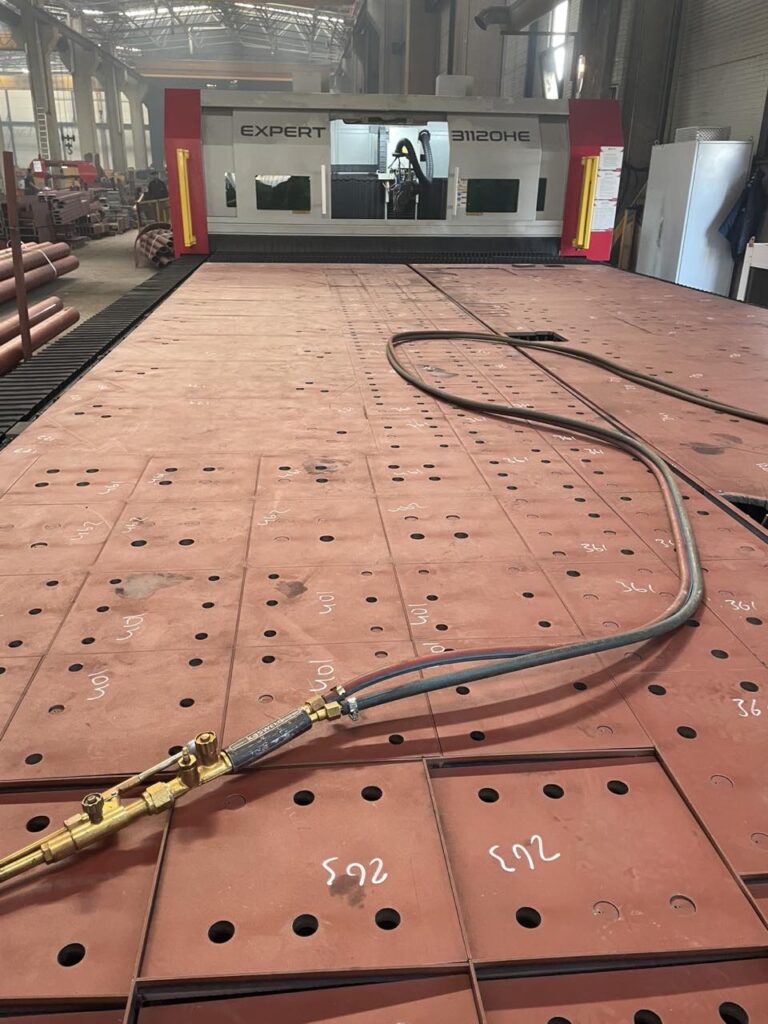
Large-Format Plate Laser Cutting
The plate machine has a specified working area of 3,100 × 12,000 mm. The customer’s reported plate applications primarily involve 30–40 mm carbon steel.
For steel fabricators, working-area selection should account for both incoming stock and finished components. Sheet dimensions, part orientation, nesting and edge allowances influence how the available area can be used.
Loading and unloading also need to be considered. The cutting area alone does not establish the floor space, lifting access or material-handling arrangement required for the installation.
When reviewing a thick-plate application, provide the material grade, thickness, drawings and required edge condition. A 20 kW power rating is one configuration detail; it does not by itself determine cutting speed, quality or production output.
Read our guide on choosing a plate laser working area for your sheet sizes for the dimensions and handling details to confirm before ordering.
H-Beam Laser Cutting
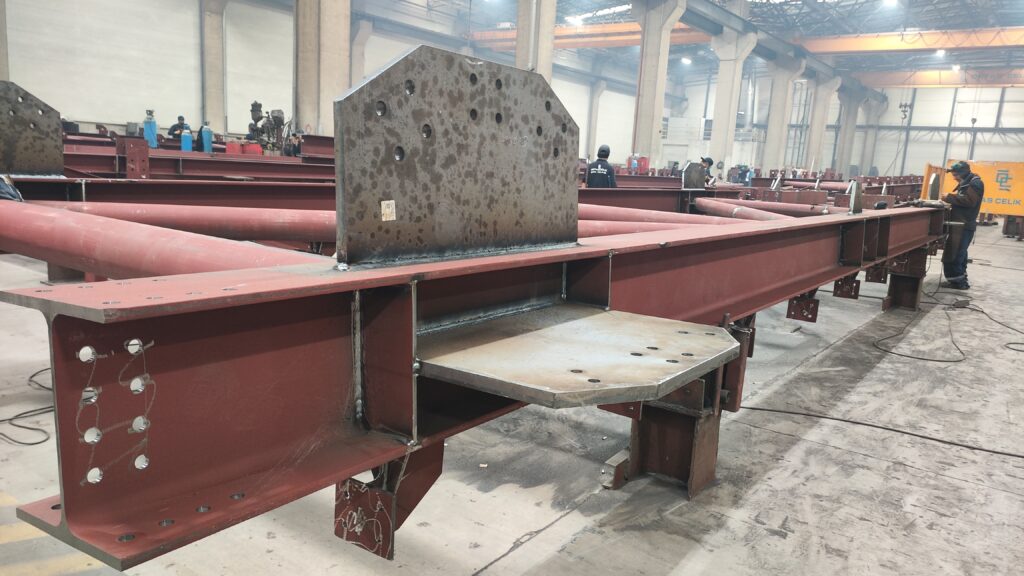
The tube laser cutting machine is used for H-beams as well as large metal tubes in this project.
H-beams introduce requirements that differ from flat plate cutting. Their geometry affects workholding, support and access to the features being processed.
An application review should include:
- Beam height and flange width.
- Web and flange thicknesses.
- Stock length and weight.
- Required holes, slots and end profiles.
- Bevel geometry, where specified.
- Finished-part support and collection.
The customer reports H-beam thickness requirements extending beyond 20 mm. Web and flange thicknesses should be identified separately, since a single thickness value does not fully describe an H-beam.
Representative drawings help establish which operations the proposed configuration must perform and whether the required features are accessible.
Large-Tube Laser Cutting
Large metal tubes form another part of the customer’s steel fabrication requirements.
Machine selection should begin with the actual outside dimensions, wall thickness, length and weight of the stock. For non-round tubes or other profiles, provide a cross-sectional drawing rather than relying on a diameter description.
The review should also cover the shortest and longest finished parts, required end cuts, holes and bevels. These details help define the clamping, support and unloading arrangement.
A nominal working-range figure is therefore a starting point for discussion, not confirmation that every workpiece within that envelope is suitable for processing.
Bevel Cutting for Component Preparation
Both the plate laser cutting machine and the tube laser cutting machine in this installation are configured for bevel cutting.
Bevel requirements should come from the component drawing and fabrication process. Relevant details include the required angle, remaining land, material thickness and cutting-head access.
For plate components, these requirements need to be reviewed alongside the part layout and edge geometry. For H-beams and tubes, the review must also consider the workpiece shape and access to the required surfaces.
Bevel capability does not establish that every cut component is ready for welding without inspection or additional preparation. Where bevel quality is critical, agree on suitable test parts and acceptance criteria before finalizing the configuration.
Equipment in the Customer’s Workshop
Installation and operator training have been completed, and both machines are in production.
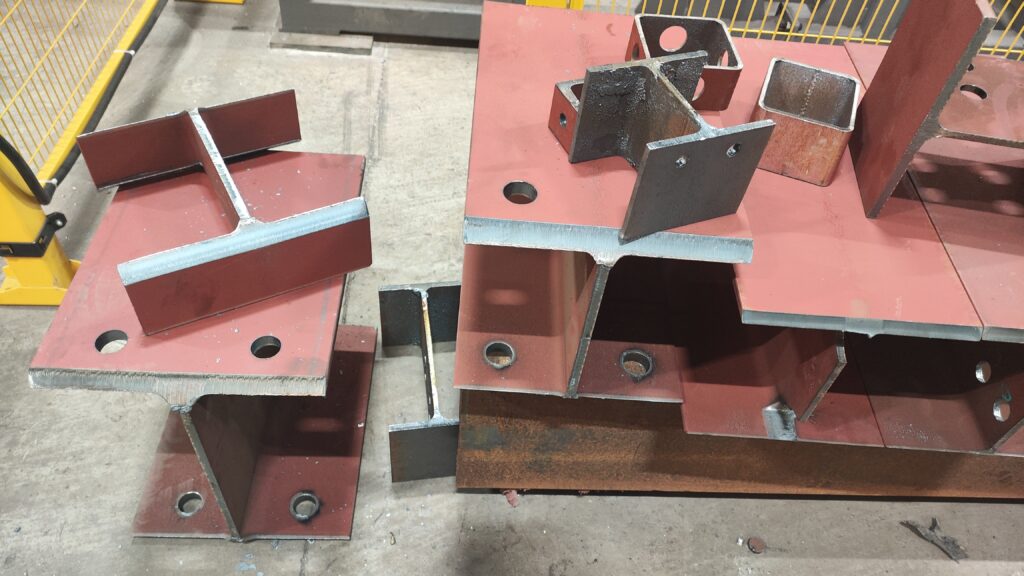
The site photographs show the equipment, plate material, structural components and tubes within the workshop. They provide context for the customer’s manufacturing activities and material flow.
Finished assemblies may involve cutting, welding and other operations. The photographs should not be interpreted as evidence that every feature or process was completed by the laser cutting equipment.
For a similar installation, review stock storage, lifting access, loading and unloading, extraction, electrical supply and maintenance space alongside the cutting requirements.
Planning a Plate and Tube Laser Cutting Configuration
A combined plate and tube application is best reviewed in two stages: define the requirements for each material form, then assess how the equipment fits the overall workflow.
Prepare the following information:
| 申し込み | Information to Provide |
|---|---|
| Plate laser cutting | Material grade, thickness, sheet dimensions, part drawings and quantities |
| H-beam laser cutting | Beam dimensions, web and flange thicknesses, length, weight and required features |
| Tube laser cutting | Profile shape, outside dimensions, wall thickness, length and weight |
| Bevel cutting | Drawings showing angles, lands, tolerances and edge requirements |
| Material handling | Loading method, unloading requirements, lifting equipment and available space |
| Installation | Electrical supply, access, extraction and operator-training requirements |
This gives the supplier a clearer basis for assessing the cutting configuration, handling equipment and installation scope.
Discuss Your Steel Structure Cutting Requirements
Explore the JQ Laser plate cutting machine range and tube laser cutting machines.
Send your plate, H-beam and tube specifications, representative drawings and material-handling requirements so our team can review a configuration for your application.
Contact JQ Laser to discuss your steel structure cutting project.
