
The global fitness and commercial gym equipment industry is undergoing a massive transformation. From commercial strength training racks and multi-functional rigs to high-end Pilates reformers, modern fitness equipment demands unprecedented structural integrity, aesthetic weld lines, and ergonomic curvature. To meet these stringent fabrication criteria, traditional mechanical saws, rotary punching, and manual drilling have become severe production bottlenecks. Enter fiber laser tube cutting technology—a single-step CNC solution that is revolutionizing how fitness equipment manufacturers process structural metal profiles.
Quick Takeaway: Transitioning from traditional multi-step cutting/punching to automated fiber laser tube cutting reduces fabrication time by up to 65%, eliminates secondary burr-grinding, and delivers tight-tolerance interlocking joints tailored for robotic welding lines.
Why Fitness Equipment Fabrication Demands Laser Precision
Commercial gym machinery is subjected to dynamic loading, repetitive stress, and severe biomechanical wear. A loose joint or an imperfect weld not only compromises equipment longevity but also poses user safety hazards. Modern gym designs feature diverse tubing geometries that present unique manufacturing challenges:
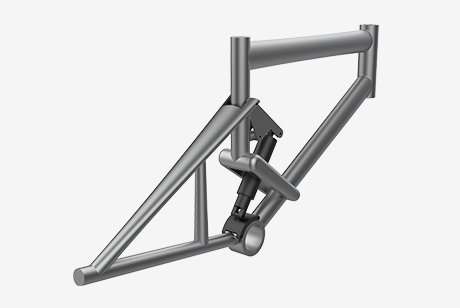
- D-Tubes and Flat-Oval Tubing: Commonly chosen for ergonomic grips, guiding rails, and modern aesthetic frames. Cutting complex saddle angles and miter joints on curved surfaces is virtually impossible with conventional mechanical tooling without deformation.
- High-Density Weight-Stack Pin Holes: Selectorized weight towers require dozens of uniformly spaced, burr-free pin holes along square and rectangular columns. Mechanical punching frequently dents thin-walled tubes, leading to jammed selector pins.
- Interlocking “Mortise & Tenon” Joints: Advanced equipment designers now incorporate self-locating tabs and slots. This allows robotic welders to assemble structural frames with zero fixtures and sub-millimeter fit-up precision.
 \
\
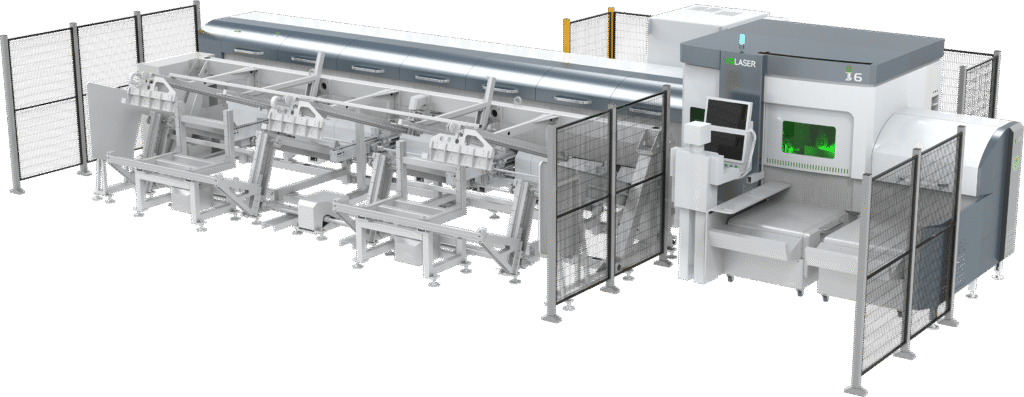
Figure 1: High-speed precision tube laser processing structural steel for commercial strength machines.
Traditional Cutting Methods vs. Automated Fiber Laser Tube Cutting
When producing commercial racks, benches, and selectorized stations, the cumulative cycle time of traditional operations eats away at manufacturer margins. The comparison below illustrates the productivity gains achieved with automated CNC laser processing:
| Fabrication Parameter | Traditional Workflow (Saw + Punch + Mill) | CNC Laser Tube Cutting |
|---|---|---|
| Processing Steps | Saw cutting → Punch press → Drilling → Deburring (4 steps) | Single continuous CNC pass (1 step) |
| Edge Quality & Burr | Heavy burrs; requires manual grinding before powder coating | Smooth, dross-free edge; ready for welding or coating |
| Geometry Flexibility | Requires dedicated stamping dies ($1,500+ per custom punch) | Instant digital design modification via CAD/CAM software |
| Material Wastage | 150 mm – 300 mm clamping tail waste per raw pipe | Zero-tailstock clamping capability (≤35 mm waste) |
Selecting the Ideal Tube Laser Configuration for Gym Machinery
Depending on your manufacturing scale and product catalog, different machinery architectures optimize return on investment (ROI):
1. High-Speed Processing for Mass Components (Racks & Weight Stacks)
For standard square profiles (50×50 mm, 75×75 mm, 80×80 mm) and high-volume pin hole perforation, rotational speed and acceleration are critical. The KS Series High-Speed Laser Tube Cutter delivers maximum chuck rotation speeds and dynamic servo response, processing complex hole patterns in seconds with minimum cycle downtime.
2. Compact & Flexible Two-Chuck Systems for Small-to-Mid Batches
Fabricators specializing in custom functional trainers, Pilates apparatus, and outdoor fitness parks benefit from rapid setup times. The S Series Two-Chuck Laser Tube Cutter offers pneumatic self-centering clamping, accommodating round, square, and flat-oval tubes without changing manual tooling jaws.
3. Zero-Tailstock Three-Chuck Systems for High-Value Alloys & Heavy Columns
When cutting expensive stainless steel tubing or heavy wall structural steel (wall thickness > 6 mm), tail waste directly degrades profit margins. Utilizing a Horizontal Three-Chucks Tube Laser allows synchronized mutual clamping and pulling during cutting, achieving true zero-tailstock material utilization and saving thousands of dollars in raw metal stock annually.
Advanced Weld Preparation: 5-Axis Beveling on Tube Intersections
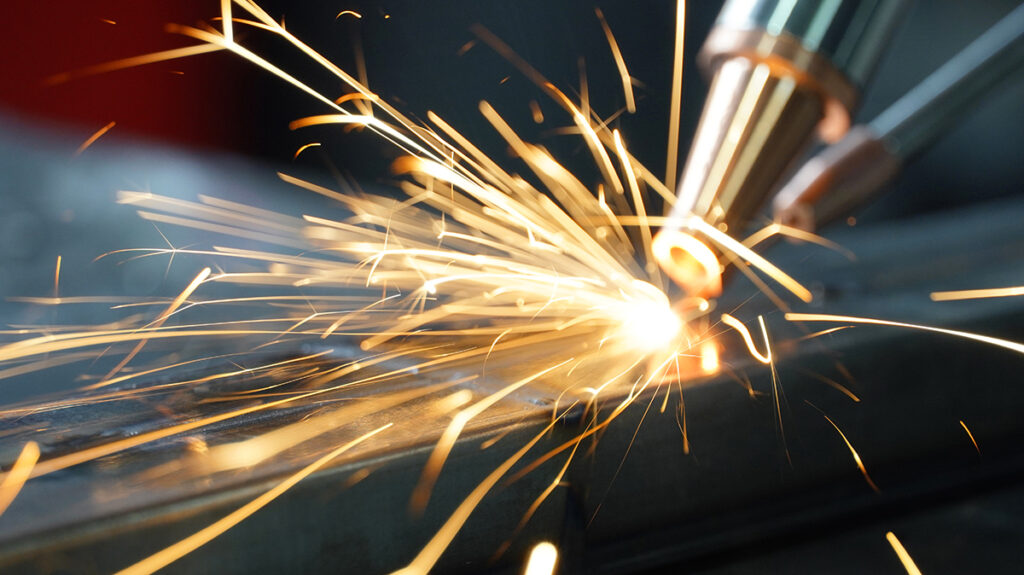
For heavy-duty commercial power racks and structural base frames, full-penetration welding is mandatory. By adopting modern 5-axis bevel laser cutting heads, manufacturers can execute ±45° bevel cuts directly along intersecting tube curves. To explore the cost dynamics and metallurgical benefits, read our in-depth Fiber Laser Bevel Cutting Technology & 2026 Buyer’s Guide.
Planning to Upgrade Your Tube Cutting Line in 2026?
Visit JQ LASER at EuroBLECH 2026 (Hanover, Germany • Hall 15, Stand E36) to witness live cutting demonstrations on smart fiber lasers, or request custom sample parts cut from your CAD drawings.
