
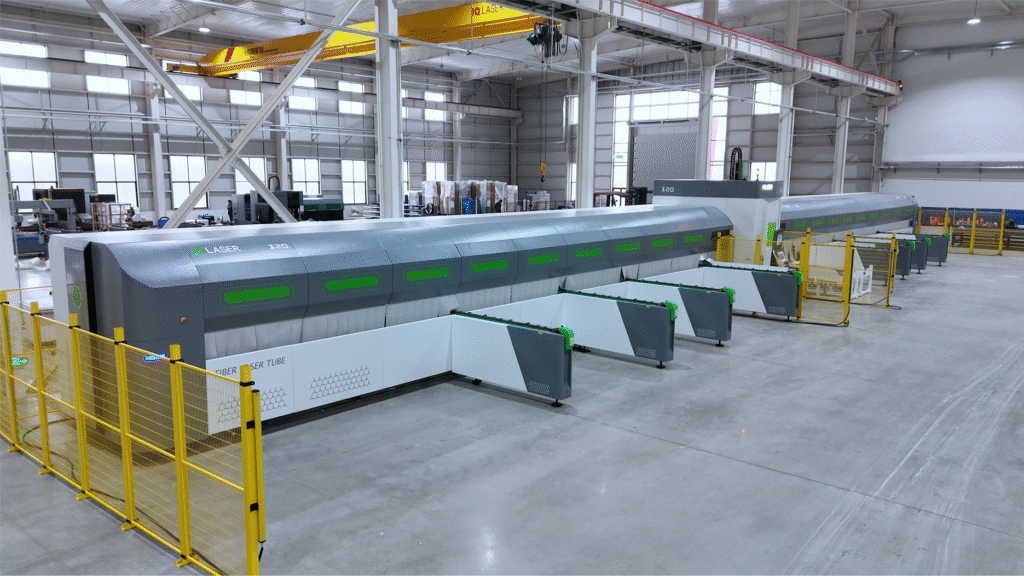
A heavy-duty tube laser cutting machine should be selected around the material you handle and the parts you deliver. Maximum tube diameter and laser power are useful starting points, but they do not tell you whether a system can load a long, heavy tube, support it throughout cutting and unload the finished components reliably. For tube processors, structural fabricators and large equipment manufacturers, the purchasing decision should connect seven requirements: tube cross-section, stock length, weight per tube, chuck configuration, support, cutting requirements and finished-part handling. This guide explains how to evaluate those requirements and select a suitable chuck size and handling configuration. The final selection should be checked against your actual material, drawings and production targets.
Start with Your Production Mix
Before comparing machines, prepare a material and part list. Include the tube shapes, material grades, wall thicknesses, stock lengths, weights and finished-part lengths that represent your normal production. Separate everyday work from occasional maximum-size orders. A machine that accommodates your largest tube is not automatically the best match for a workshop that mainly processes smaller sections in short batches. Equally, buying only for today’s average workload may leave important future contracts outside the machine’s capacity. Describe the features you need to produce: holes, slots, end cuts, intersecting contours or weld preparations. Identify which operations must be completed on the laser and which will remain downstream. Provide drawings with tolerances rather than relying on sample photographs alone. The objective is a defined production requirement that every supplier can quote against. This makes differences in handling equipment, options and acceptance conditions easier to identify.
Check Round, Square and Rectangular Tube Capacity Separately
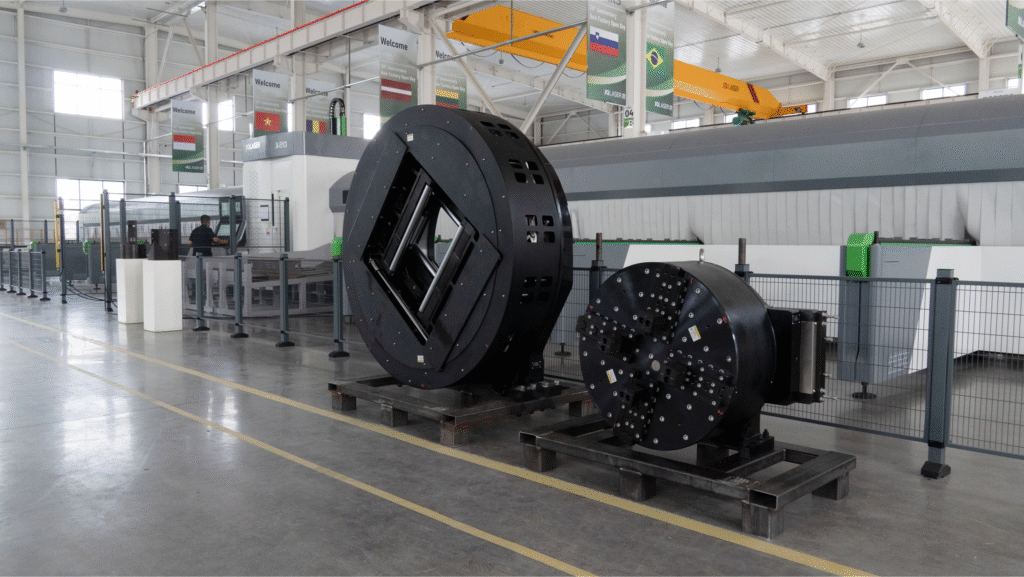
The diameter rating of a large diameter tube laser cutting machine should not be treated as its capacity for every cross-section. JQ LASER offers heavy-duty chuck configurations including 500 mm and larger sizes up to 850 mm, depending on the application. These figures describe nominal chuck size options, not a universal tube cutting range. Confirm the actual gripping range and permitted workpiece dimensions for each proposed configuration. For rectangular sections, provide both outside dimensions, wall thickness and corner details. Ask the supplier to confirm the permitted section envelope, gripping arrangement and clearance during rotation. Open profiles also require a separate assessment; support for round and square tubes alone does not establish suitability for every beam or channel. Include the condition of the incoming material in the discussion. Share the supplier’s tolerances and examples of bow, twist or dimensional variation where relevant. Request a demonstration using representative stock, including any measurement or compensation functions offered for the selected configuration.
Evaluate Weight per Tube and Support Together
Heavy-duty capacity must be assessed in terms of the individual workpiece. Confirm that a published weight is the maximum weight per tube, rather than the capacity of a storage rack or the combined weight of a bundle. As a planning calculation, stock length multiplied by the material supplier’s mass per metre gives the approximate weight of one tube. For example, a 12 m tube at 150 kg/m weighs approximately 1,800 kg. This is an illustrative calculation, not a machine performance test. Then review how the tube is supported while it is fed, rotated and cut. Ask for the support sequence, the permitted unsupported lengths and the handling method as the remaining stock becomes shorter. The support arrangement should also be reviewed for your different cross-sections and finished-part lengths. Review the load ratings of the chuck system, supports, loader and unloading equipment together. A larger nominal chuck size does not, by itself, establish a higher allowable tube weight. Confirm that the proposed configuration can handle the required section, length and weight in combination throughout the complete process.
Compare Three-Chuck and Four-Chuck Systems by Their Working Sequence
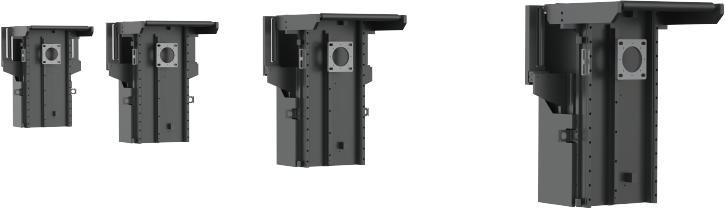
Chuck count is only one part of the selection. The useful comparison is how a specific machine grips, feeds and supports your material through the complete cutting sequence. Ask the supplier to explain which chucks hold the tube during each operation, how the workpiece is transferred or repositioned, and how the final section is handled. Include cuts near tube ends and the shortest and longest parts in your evaluation. A higher chuck count does not automatically mean a higher load rating. Chuck construction, drive capacity, machine structure and the support arrangement must be assessed as a complete system. Compare the documented working limits of each proposed configuration rather than ranking machines by chuck count alone. Compare the proposed arrangements using your own drawings. Ask for the expected remnant length and material yield for the same stock and part mix. Treat “zero tailing” as a condition to demonstrate for an agreed job, rather than a universal result for every nesting plan.
Explore JQ LASER’s heavy-duty three-chuck tube laser systems when reviewing the available machine arrangements.
Specify Loading and Unloading as Separate Requirements
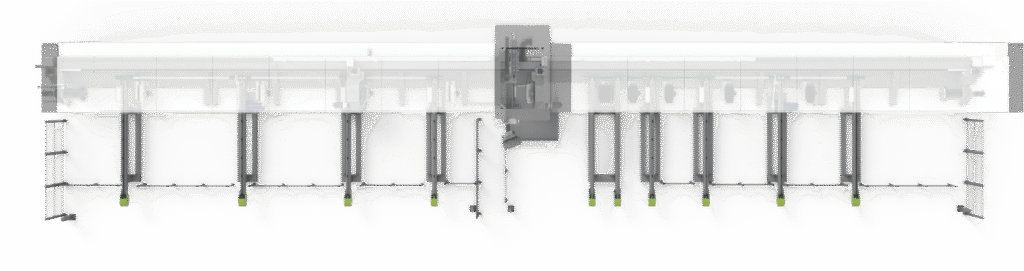
A long loading bed does not, by itself, confirm that the machine can unload a finished part of the same length and weight. State the maximum stock length and the maximum finished-part length separately. Also specify the smallest parts, their quantities and how they should be collected. Long, heavy components and short cut pieces may require different receiving arrangements. Discuss whether short and long parts need separate receiving areas, and how each part remains supported as it is cut free and discharged. Ask the supplier to demonstrate the intended process for your heaviest finished part as well as your shortest components. Confirm the loading and unloading lengths included in the quotation, together with their respective weight limits. Identify which handling functions are included and which require optional equipment or a customized layout. Also review how stock reaches the loader, whether cranes or forklifts remain necessary, where finished parts go and how operators access the machine. Include material staging, service access and downstream transfer in the proposed floor layout. For projects involving multiple handling stages, review JQ LASER’s automated tube processing solutions as part of the broader production plan. Confirm compatibility with the selected heavy-duty configuration during the application review.
Match Laser Power to the Required Cut
Choose laser power after defining the material, wall thickness, features and required edge condition. Ask for cutting results on the grades and thicknesses you actually purchase. A laser power rating alone does not establish a production thickness limit for every material or feature. Request a proposed power configuration supported by sample cuts and an agreed quality target. Request a sample-cut record that identifies the material, wall thickness, gas, laser configuration, cut quality and processing time. If bevels or other specialist features are required, confirm the cutting head, software and supported geometry for the exact model being offered. Compare full job time as well as cutting time. Loading, gripping, repositioning, unloading and any subsequent deburring or machining belong in the production assessment. Higher cutting speed is useful only when the rest of the process can support the required output.
Define Finished-Part Acceptance Before the Test Cut
A positioning-accuracy specification is not a guarantee of the same tolerance on every finished feature. Write the acceptance criteria around the part drawing and its intended use. Agree on the dimensions to inspect, the measurement method and the acceptable condition of the cut edges. Check hole and slot positions, part length and any mating features that affect the next manufacturing step. Where assembly fit matters, include a fit-up check instead of assessing the cut surface alone. ISO 9013 describes geometrical specifications and quality tolerances for thermal cuts. Where applicable, the buyer and supplier can reference the appropriate requirements in the drawing or delivery agreement. Confirm the relevant edition, amendments and scope; a reference to the standard is not a claim that every configuration or part achieves a particular quality class.
For a useful acceptance trial, select a small set of representative jobs: a common production part, a long or heavy component and a part with demanding features. Record the setup, material condition, full processing time, inspection results and any secondary work required.
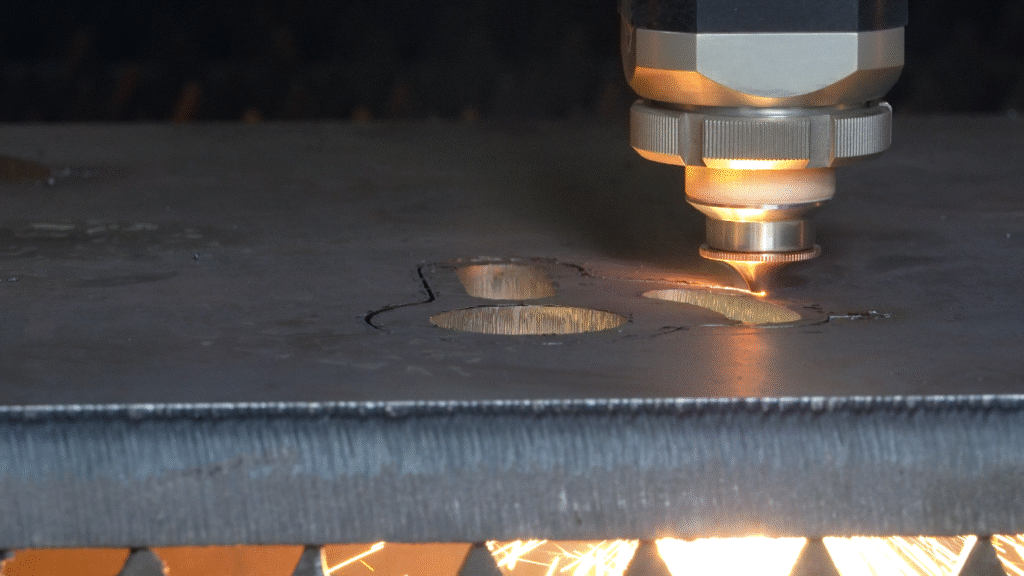
Select a Chuck Size Around Your Workpiece
JQ LASER can discuss heavy-duty configurations with nominal chuck sizes including 500 mm and options up to 850 mm. The appropriate size depends on the workpiece and the complete handling arrangement, rather than on choosing the largest chuck available. When considering a 500 mm chuck configuration, ask for the approved round, square and rectangular workpiece ranges, together with the minimum gripping dimensions. For larger chuck options up to 850 mm, request the same checks plus confirmation of the workpiece weight, support arrangement and clearance throughout rotation and transfer. Do not interpret nominal chuck size as the guaranteed maximum outside diameter of a round tube or the side length of a square tube. Ask the supplier to distinguish the chuck specification, usable gripping range and actual cutting envelope in the technical proposal. Discuss customization around the requirements that matter to your production: stock length, section geometry, weight per tube, finished-part length and material flow. Have JQ confirm the proposed combination against representative drawings, and specify the included equipment and options in the final quotation.
Prepare an RFQ That Produces a Useful Proposal
Send a material list covering grades, tube shapes, dimensions, wall thicknesses, stock lengths and weights. Attach representative part drawings or 3D files, finished-part lengths, batch sizes and annual or monthly production requirements. Explain your current workflow and the bottleneck you want to address. Include available floor space, material delivery arrangements, utilities and the planned route to the next operation. State any inspection requirements and installation, training or service expectations. Ask each supplier to separate the base machine, handling equipment, optional cutting functions, installation and support scope in its offer. Evaluate the expected cost per accepted part using documented cycle times and agreed assumptions for labour, gas, consumables and secondary operations. Contact JQ LASER with your tube specifications and part drawings to request a configuration review. We can discuss the required chuck arrangement, support, loading and unloading equipment around your intended production workflow.
Frequently Asked Questions
What makes a tube laser cutting machine suitable for heavy-duty work?
Suitability depends on the complete handling and cutting system: permitted tube section, weight per tube, stock length, gripping, support and finished-part discharge. Check these requirements together rather than relying on the machine label or laser power.
Is a four-chuck machine always better than a three-chuck machine?
No. Compare the rated load, working sequence, support arrangement and handling of your actual parts. Chuck count alone does not determine the capacity or suitability of the complete machine.
Does an 850 mm chuck mean the machine can cut an 850 mm tube?
Not necessarily. Nominal chuck size and the approved cutting range are different specifications. Confirm the permitted round-tube diameter, square- and rectangular-section dimensions, gripping range and rotation clearance for the proposed configuration.
How should I verify a zero-tail claim?
Ask for the achievable remnant length and material yield using your stock, part geometry and nesting plan. Include the final cutting and discharge sequence in the demonstration and record the result in the agreed proposal.
What should I send before requesting a quotation?
Provide tube dimensions, material grades, wall thicknesses, stock lengths and weights, representative drawings, finished-part lengths, production volumes and available space. These details allow the supplier to assess the complete configuration.
