
Choosing a tube laser cutting machine manufacturer in China involves evaluating the supplier, the proposed machine and the support available after delivery.
A useful comparison starts with your production requirements. The manufacturer should be able to explain how its proposed configuration handles your materials, tube sections, finished parts and production quantities—and provide evidence that supports the proposal.
This guide explains what to request when comparing manufacturers, how to evaluate their responses and what to confirm before placing an order.
Start with a Consistent Application Brief
Suppliers cannot provide comparable recommendations if each receives different information.
Prepare one application brief and use it throughout the selection process. Include representative drawings, material specifications, tube dimensions, wall thicknesses, stock lengths, finished-part lengths and expected production quantities.
Separate routine production from occasional work. A machine selected around one unusually large component may not suit the parts that occupy most of your working week.
Also identify the features that determine whether a part is usable. These might include mounting holes, angled ends, slots, notches, bevels or the relationship between features on different faces.
Our guide to preparing information for a tube laser quotation explains how to assemble this information. When comparing manufacturers, use that brief as the common basis for every proposal.
Verify Who Supplies the Machine and Who Supports It
Establish the roles of the companies involved in the purchase.
Ask which company manufactures the equipment, which entity issues the quotation and which team handles installation, training, warranty requests and spare parts. A manufacturer, distributor and local service provider may each have a role. The responsibilities should be clear.
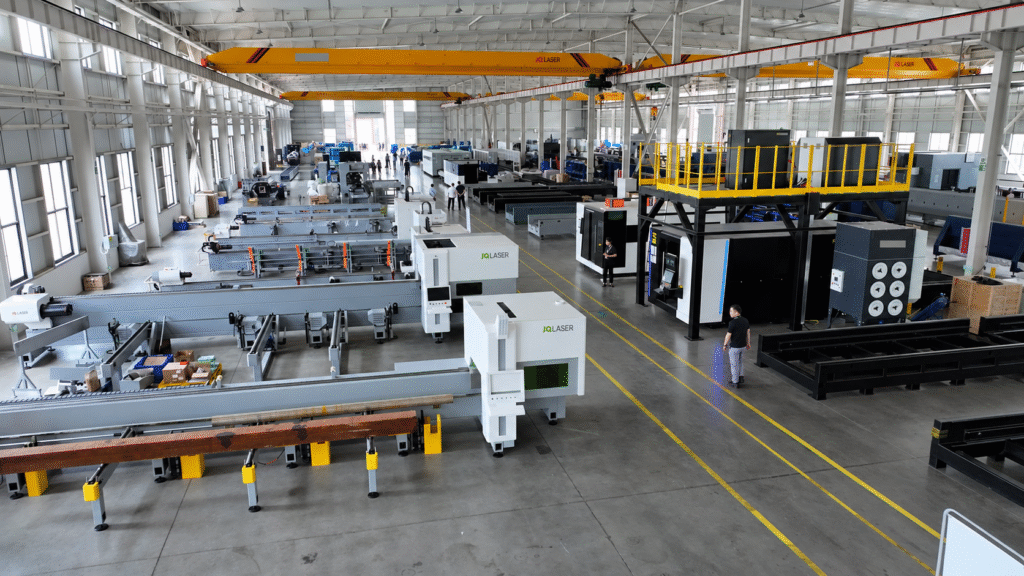
A live factory walkthrough can help connect the proposal to the equipment being discussed. Request a focused demonstration of the relevant machine type, assembly or inspection stages, and the facilities used for application testing.
Factory size and the number of machines visible in a video do not establish whether a particular configuration suits your work. Ask questions tied to your project:
- Who reviews the drawings and recommends the configuration?
- Who prepares and runs the sample program?
- How is the machine inspected before shipment?
- Who resolves a technical question after installation?
- Which documents identify the final machine configuration?
If customer references are available, ask for examples involving similar processing requirements. Contact with an existing customer should be arranged with that customer’s permission.
Compare the Proposed Configuration in Writing
Two quotations with the same laser power can describe substantially different production systems.
Request an itemized configuration covering the laser source, cutting head, chucks, supports, loading and unloading equipment, control system, software and auxiliary equipment. Identify what is included, what is optional and what requires separate preparation at your site.
Tube Sections and Workpiece Weight
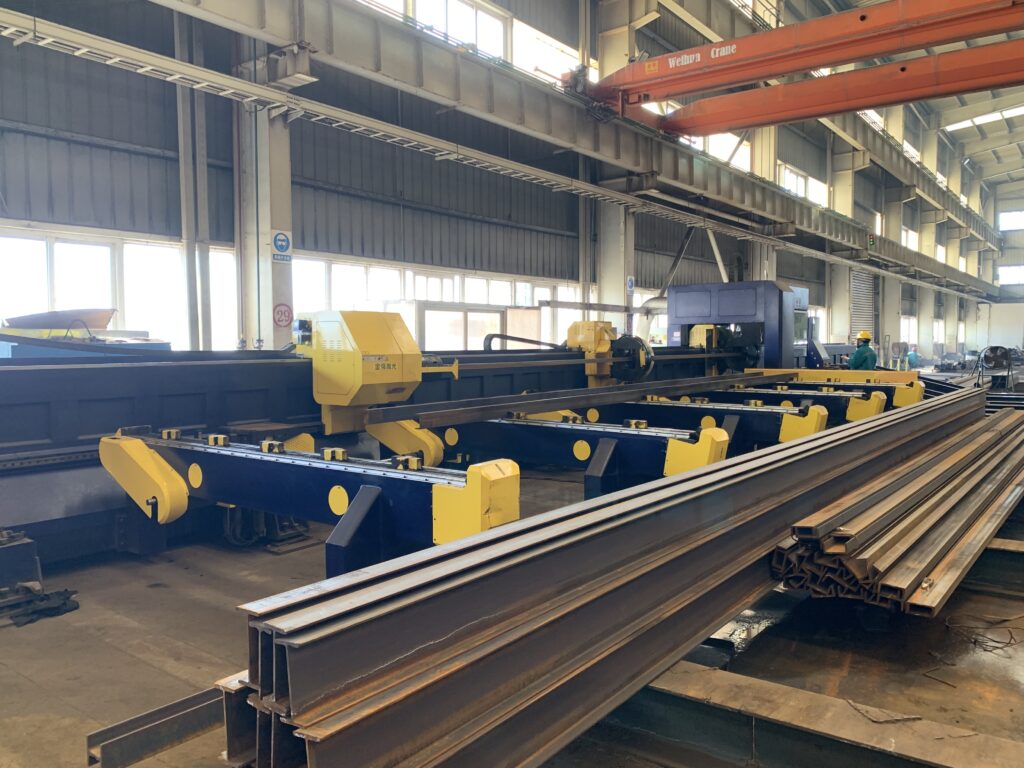
Check the supported section shapes and dimensions together with stock length and weight.
Do not assume a stated round-tube diameter applies directly to square, rectangular or open sections. Ask the manufacturer to confirm the proposed configuration against your actual section list.
For rectangular components, the relationship between holes, corners and end features can be important. Our article on square and rectangular tube laser cutting explains the details worth including in an application review.
Loading, Support and Finished-Part Collection
Review incoming stock and finished components separately.
A machine may accept the required raw-material length while needing a particular receiving arrangement for the finished part. Short components, long components and mixed-length batches can also require different collection methods.
When discussing a configuration such as the JQ Laser 12035ET tube laser cutting machine, confirm the quoted loading, support and unloading arrangements against the lengths and weights in your production list.
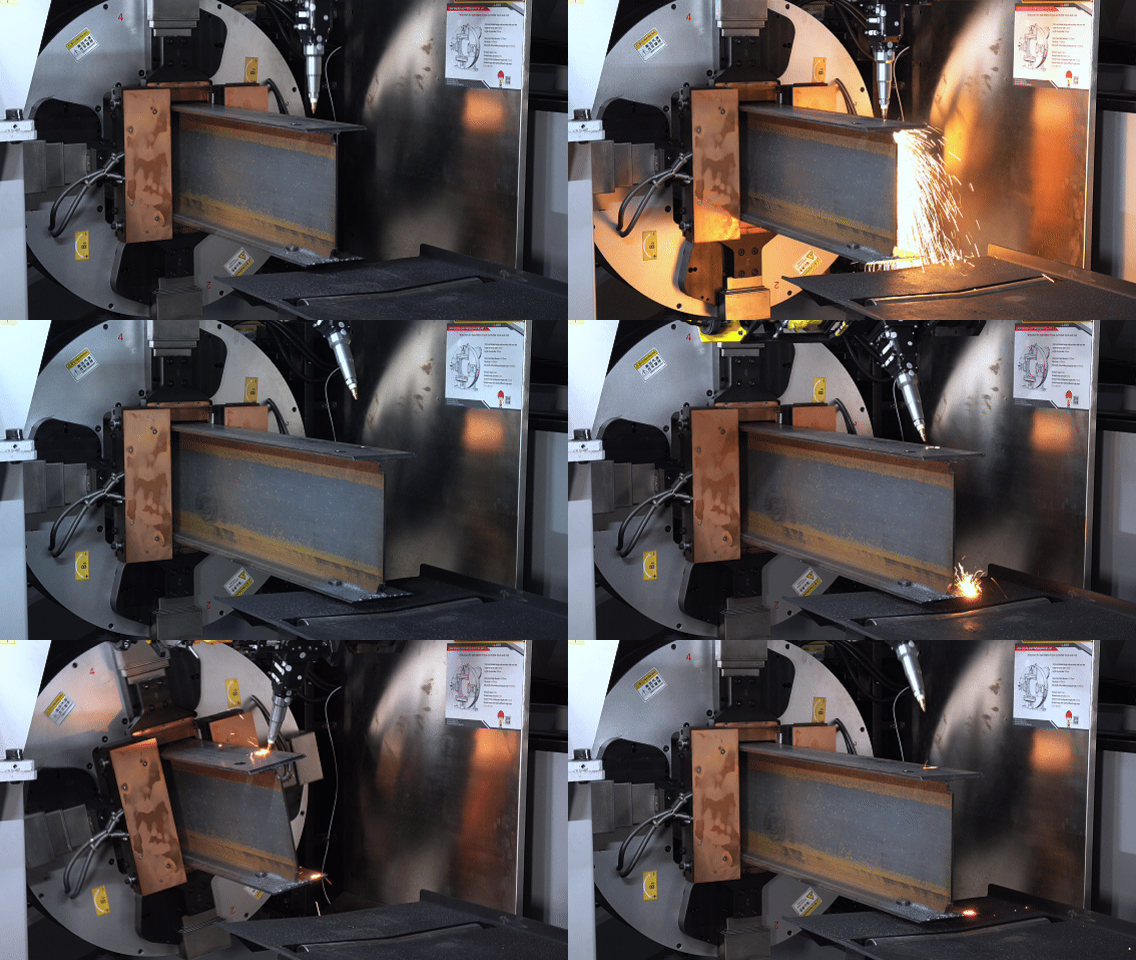
Ask the supplier to demonstrate the complete handling sequence rather than showing only the cutting head in operation.
Model Selection
A useful recommendation explains why the proposed model fits your parts and where its limitations lie.
For example, a proposal involving the JQ Laser i6 tube laser cutting machine should connect the selected configuration to your tube sections, part geometry and batch requirements.
If larger or heavier stock leads to a discussion of the i20 tube laser cutting machine, request the same application review. Confirm the relevant dimensions, workpiece weight, support and handling requirements in the written offer.
The model name is the starting point for this discussion. The final configuration defines what is being supplied.
Request Sample Cutting Under Comparable Conditions
A sample test should help establish whether the proposed machine can produce your parts to the agreed requirements.
Give shortlisted suppliers the same drawing revision and inspection criteria. Where practical, use material with the same grade, section dimensions, wall thickness and surface condition.
Record the equipment and test conditions. If a supplier uses a different laser power, cutting head, assist gas or handling arrangement from the quoted machine, ask how that difference affects the relevance of the result.
Inspect the Part, Not Just the Video
A cutting video shows the process, but it does not replace dimensional inspection.
Review the features that matter to production: hole size and position, end geometry, cutouts, bevel details and assembly fit. Check whether the part requires cleaning, deburring or another operation before it moves to the next stage.
Ask for measurements using the agreed datums. Machine positioning or repeatability specifications should not be treated as a guarantee of finished-part tolerances.
Define What the Recorded Time Includes
A quoted cycle time should identify its start and finish points.
Establish whether it includes loading, setup, locating the stock, cutting, repositioning, unloading and part collection. If some activities are excluded, record them separately.
Also distinguish a software estimate from a measured machine trial. Both can contribute to planning, but they provide different kinds of evidence.
Demonstrate the Software with Your Files
Software should be evaluated using the files and workflow your team expects to use.
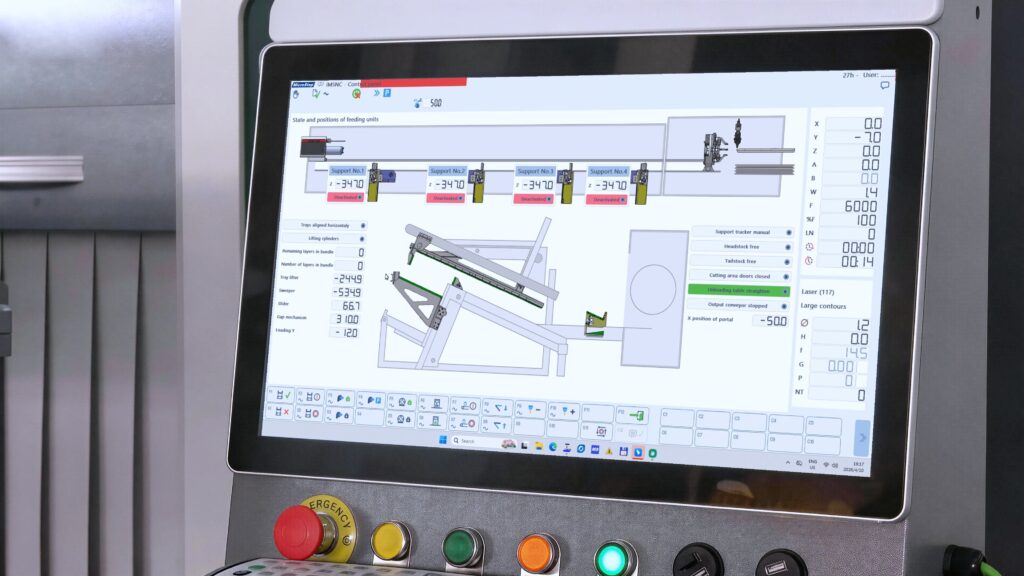
Request a demonstration that begins with a representative drawing or model and follows it through import, geometry review, nesting, programming and machine preparation.
Check how the proposed software handles:
- Section orientation and feature location.
- Mirrored or repeated components.
- Part identification and drawing revisions.
- Cutting-path review.
- Program transfer and operator access.
Confirm which software modules and licenses are included. Ask whether updates, additional workstations, remote access or particular functions involve separate terms or charges.
Avoid assuming that a file opening successfully means every feature has transferred correctly. Compare the imported geometry with the controlled drawing, then inspect a cut sample.
Review Documentation and Quality Records
Request documents that apply to the supplier, equipment and configuration being considered.
For management-system certificates, check the company name, issuing body, scope and validity. A certificate should be reviewed for what it covers rather than treated as general proof of every machine claim.
ISO explains that it develops standards but does not itself issue certificates; certification is performed by external certification bodies. Its official explanation of certification is a useful reference when reviewing supplier statements.
For the machine itself, ask what documentation will be supplied for the destination market and who will review its suitability. Keep the proposed protective arrangements, operating procedures and installation requirements within the project discussion.
Quality records should also connect to the machine being purchased. Request the inspection and acceptance documents associated with the agreed configuration and test parts.
Confirm Installation, Training and Service Responsibilities
Service arrangements need enough detail to support day-to-day operation.
Ask how installation is organized, what the site must prepare and which activities are included in operator training. Depending on the project, preparation may involve power, assist gas, compressed air, cooling, extraction, lifting equipment and floor space.
Confirm the requirements for your destination and the quoted equipment. Do not assume that a domestic demonstration machine’s electrical specification matches your factory supply.
For ongoing support, establish:
- How to report a fault and provide diagnostic information.
- The available support languages and working hours.
- How remote assistance is arranged.
- Who supplies replacement parts.
- How an onsite visit is organized when required.
- Which travel, labor and shipping costs are included or excluded.
A response-time statement should explain what “response” means. Acknowledging a message, beginning remote diagnosis and arriving onsite are separate events.
Warranty terms should identify coverage, exclusions, consumables and the process for making a claim. Use the written project terms when comparing offers.
Use a Supplier Comparison Table
Keep the evidence beside each claim.
For every shortlisted supplier, record the document, drawing, test result or demonstration that answers the question. If a point is unresolved, mark it as pending rather than assuming it is included.
| Comparison area | Evidence to request | What to record |
|---|---|---|
| Supplier responsibilities | Quotation and service responsibility list | Manufacturing, installation and support roles |
| Application suitability | Review of your section and part list | Confirmed scope and exceptions |
| Machine configuration | Itemized technical specification | Included equipment and options |
| Material handling | Layout and handling demonstration | Stock, finished-part and collection requirements |
| Sample quality | Inspected samples and measurement records | Results against agreed drawing requirements |
| Production timing | Test conditions and time breakdown | Measured activities and exclusions |
| Software | Demonstration using your files | Included modules, licenses and workflow |
| Documentation | Relevant certificates and machine records | Scope, identification and review status |
| Hizmet | Installation, training and support terms | Responsibilities and additional costs |
| Acceptance | Agreed procedure and test criteria | Required evidence before acceptance |
This table helps expose differences hidden by a single machine price.
For example, one offer may include unloading equipment and operator training while another prices them separately. A sample may have been cut on a configuration different from the one quoted. Record those differences before making a commercial comparison.
Compare the Cost of a Defined Production System
Build the cost comparison around a common scope.
Alongside the equipment price, identify freight, site preparation, installation, training, software, assist-gas equipment, consumables and spare parts. Confirm which costs are included in each proposal and which remain your responsibility.
For operating-cost estimates, request the assumptions behind electricity, gas, consumable and labor calculations. Use conditions relevant to your parts and local costs.
Separate verified measurements from estimates. A calculation based on continuous cutting may not represent a shift that includes material changes, programming and part collection.
The goal is to understand what the proposed system costs to install and operate under your production conditions.
Frequently Asked Questions
Should I choose the manufacturer with the largest factory?
Factory scale is one part of supplier evaluation. Application testing, configuration clarity, inspection records and service arrangements provide more direct evidence of suitability for your project.
Can I compare manufacturers by laser power alone?
No. Laser power does not define the complete machine. Tube sections, workpiece weight, chucks, supports, handling, software and required part quality also need to be compared.
Is a finished sample enough to approve a machine?
A sample is useful when its material, machine configuration and test conditions are known. It should be assessed against agreed inspection requirements and considered alongside the complete production workflow.
Should every unresolved item be settled before ordering?
Resolve items that affect the machine scope, application suitability, installation, acceptance and service responsibilities. Record the agreed outcome in the project documents so both teams work from the same specification.
Request an Application-Based Machine Review
Start the discussion with the parts your factory needs to produce.
Send your tube dimensions, material, wall thickness, stock and finished-part lengths, drawings and production requirements. Include the features that are difficult to manufacture and any handling or software needs that affect the project.
Contact JQ Laser to discuss your tube laser cutting application. Our team will review your requirements and discuss a suitable configuration and sample cutting test.
