
Automatic loading is worth evaluating when the same tube sizes run in repeat batches, when the laser regularly waits for stock, or when long and heavy tubes are difficult to transfer. The right configuration depends on how material reaches the machine, how often the shop changes tube sizes, and what happens to the finished parts after cutting.
Start with a representative week of orders. Look at how many tubes you run per batch, how often you change the cross-section or size, and which jobs require a crane or forklift. Then ask the supplier to demonstrate the jobs that best represent those conditions.
Match the Loader to Your Order Mix
| Production pattern | What to compare | What to ask the supplier to demonstrate |
|---|---|---|
| Small batches with frequent size changes | Compare operator-assisted loading with an automatic loader that can change over between your common sizes. Include the time to remove leftover stock. | Finish one batch and start another with a different tube size or cross-section. Show the adjustments and operator tasks. |
| Repeat batches of the same tube | Evaluate how the loader separates individual tubes, feeds them to the machine and resumes after replenishment. | Run several consecutive tubes from the same batch, replenish the loader and show how finished parts are collected. |
| Long or heavy stock | Check the transfer from storage to the machine, support during feeding and the route for removing finished parts. | Show how the proposed setup handles a representative long or heavy tube and how the resulting parts are received. |
Small batches with frequent size changes
A job shop may cut rectangular tube in the morning, switch to round tube for a short order, then return to a rectangular section in another size. For that shop, the time between batches matters as much as the time to feed each tube.
Ask whether changing sizes requires unloading leftover stock, moving guides, changing supports or adjusting the way the loader separates tubes. Include the time to stage the next material and verify the first part. If operators still need to perform several of these steps for every short order, compare the proposed loader with a simpler arrangement that fits your material handling requirements.
Repeat batches of the same tube
A bundle loader is a candidate when a substantial share of your work uses the same stock for consecutive runs. Check how it handles the way you actually receive material. For example, ask whether the bundle can be staged as delivered or must be separated and arranged before it reaches the loader.
Watch the handoff between the loader and the machine. Ask what happens when the rack needs replenishing or when a tube does not feed as expected. Also check how often the operator must empty the receiving area or sort parts. If the machine already spends much of its time waiting for finished parts to be removed, review that step alongside the loading option.
Long or heavy tubes
For long or heavy tubes, the main question may be how to transfer and support the stock through the entire process. The crane or forklift may still be needed to place material on the loading rack. Ask who handles that transfer, how much staging space it takes and whether the same lifting equipment is shared with other workstations.
Give the supplier a representative combination of cross-section, stock length and weight per tube. Confirm that the loader, supports and chucks can handle that combination. Then specify the longest and heaviest finished parts separately. Their receiving and removal requirements may differ from those of the raw stock.
For more detail on checking supports, chuck capacity and separate loading and unloading limits, see our heavy-duty tube laser cutting machine guide.
Measure the Batch and the Changeover Separately
Ask the supplier to use the same stock, drawings, batch size and part acceptance requirements when comparing loading options. Agree on what each timed run includes, especially whether material is already staged at the start and where finished parts must be placed at the end.
Record three measures:
- Elapsed batch time. Measure from the agreed starting point to the last accepted part reaching the agreed collection point. Record any stops for replenishment, repositioning or clearing the receiving area.
- Operator time. Record the time people spend actively staging stock, adjusting guides, replenishing the loader, dealing with feed interruptions or collecting parts. A short machine stop can still require an operator to leave another task.
- Changeover time. Measure from the last accepted part of one job to the first accepted part of the next job. Record the tube sizes used and any adjustments needed. Keep this measure separate when the batch timing already includes setup.
A short trial can answer a specific question, such as whether a rectangular tube feeds consistently through the proposed loader. For a purchase comparison, include a representative changeover and a run long enough to observe the replenishment and part collection steps relevant to your shop. Record any steps that the supplier could not demonstrate.
Put the Handling Configuration in the Quote
Ask the supplier to identify which equipment and operations are included. A useful quotation names the loading arrangement, the tube sizes and weights it is intended to handle, the supports required and the method of receiving finished parts. It also shows the floor space needed for stock staging and access to the loader.
Compare that scope with the work your team will still perform. If your most common jobs run smoothly with the proposed loader and your receiving area can keep up, automatic loading may be a good fit. If frequent size changes dominate the schedule, give more weight to changeover time and how easily the next job can be staged. For heavy stock, check the transfer and support sequence before comparing feed times.
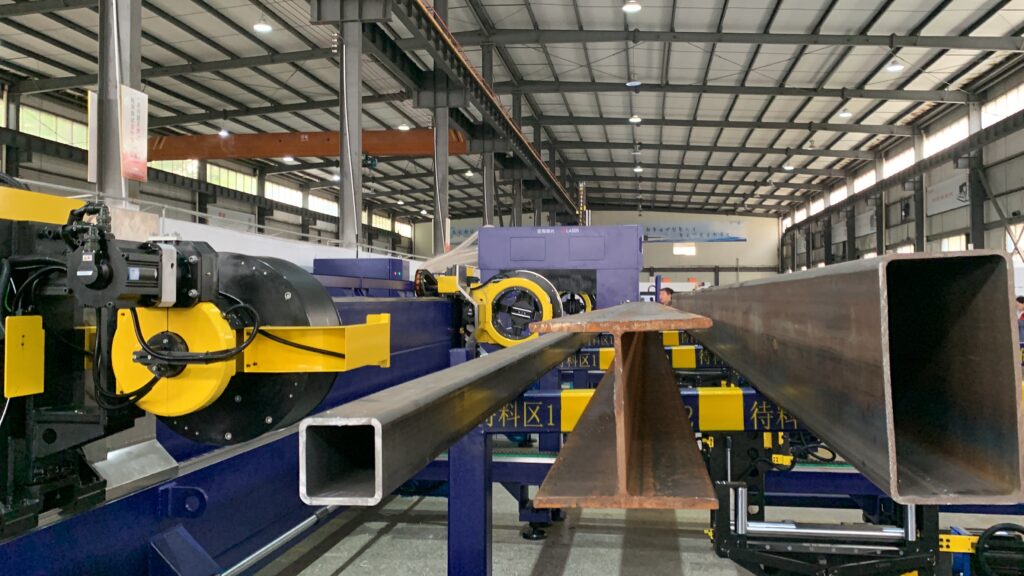
Review the JQ Laser tube laser cutting machine range when comparing configurations for your shop.
Request a Tube Loading Configuration Review
Send your usual tube cross-sections and sizes, stock lengths, weight per tube, typical batch quantities and how often you change sizes. Include your longest finished part and how you currently move raw stock and collect cut parts.
JQ Laser can review these details with you and discuss a loading and receiving arrangement for your production mix.
